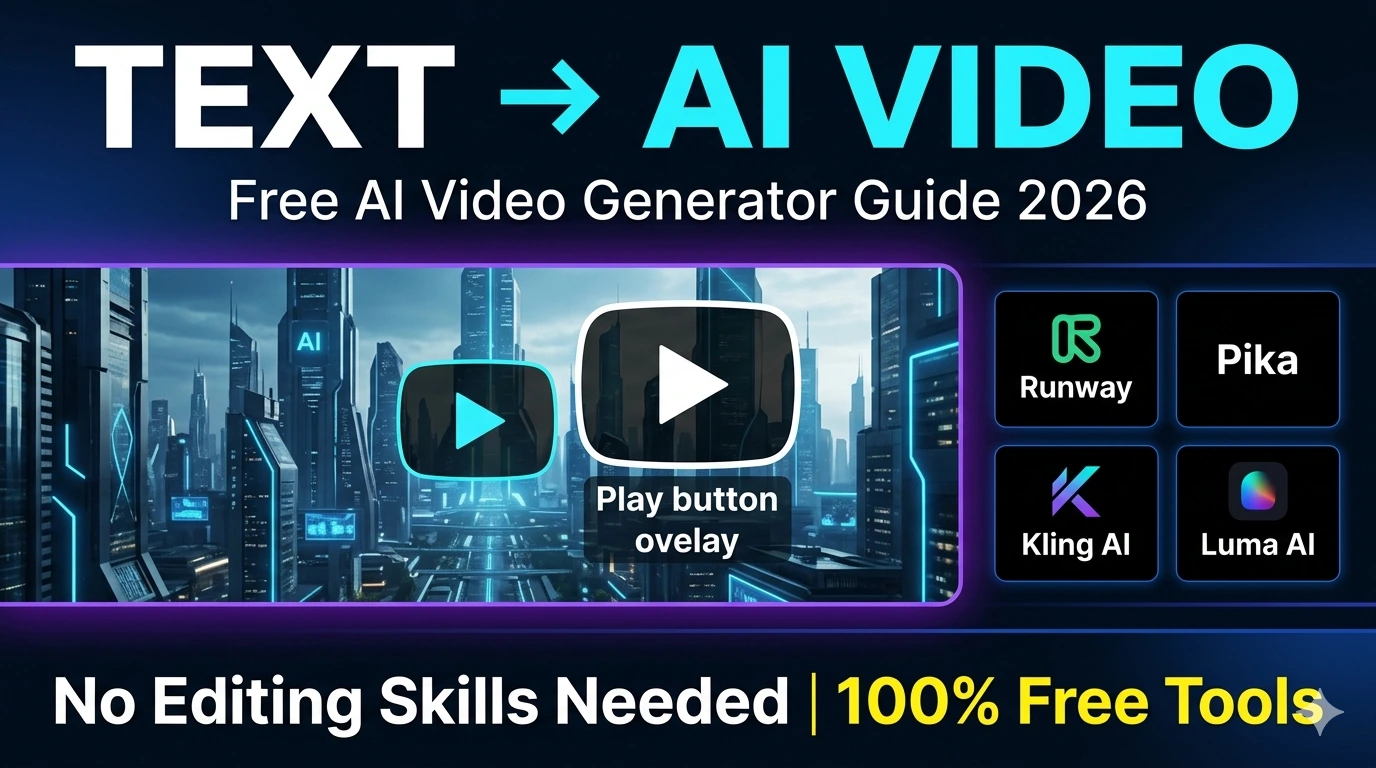
Al Videos From Text Creating professional videos used to take hours of manual editing, expensive software, and advanced skills. But in 2026, modern tools have made it possible to generate high-quality AI videos from text in just a few minutes.
Whether you want to create viral YouTube shorts, Facebook reels, TikTok content, ads, or storytelling videos, using an AI videos from text generator makes the entire process much easier and faster. In this complete guide, you’ll learn exactly how to create AI videos from text for free using the best tools available right now.
Table of Contents
ToggleWhat Is An AI Text To Video Generator?
An AI text-to-video generator is an advanced artificial intelligence tool that automatically creates high-quality video content from simple written prompts. Instead of spending days on manual filming or animation, you simply describe your vision in text, and the AI handles the scenes, character motion, lighting effects, and overall visuals.
These tools are powered by complex Diffusion Models and Large Language Models (LLMs) that have been trained on millions of video clips. For example, if you type:
“A cinematic sunset over a futuristic city with flying cars, 4K resolution, hyper-realistic.”
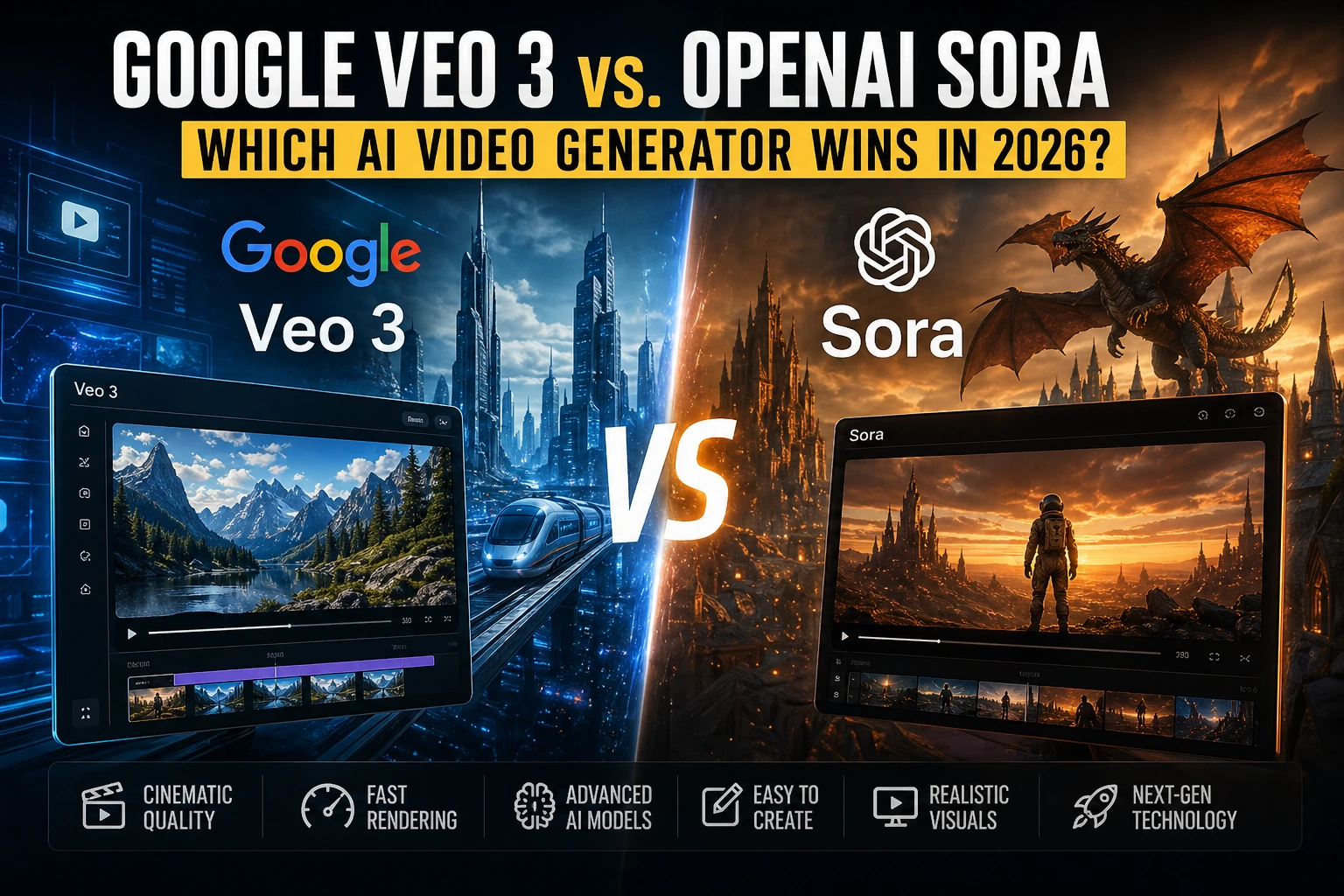
The AI interprets each word to generate a short, high-definition video that matches your description perfectly. In 2026, popular generators like OpenAI Sora and Google Veo 3 have made it possible to create realistic motion and cinematic effects that were once only possible for big-budget movie studios—all without any manual editing skills. Al Videos From Text
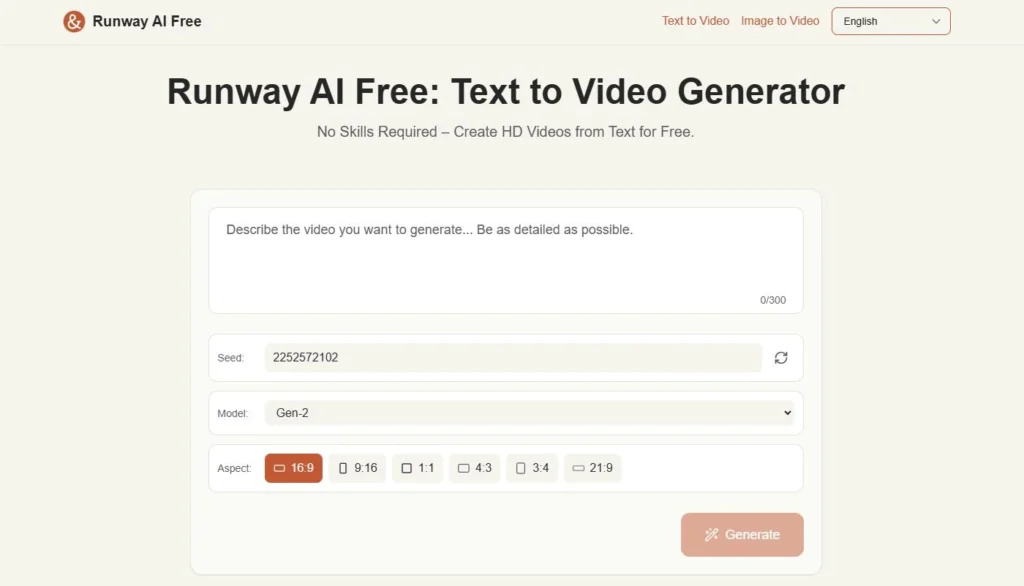
Al Videos From Text Runway remains a powerhouse in the creative world. In 2026, it continues to set the standard with its advanced Gen-3 architecture, offering unmatched consistency and physics in video generation. Whether you are starting with a simple text prompt or an existing image, Runway breathes life into your ideas with hyper-realistic motion.
Key Features:
Advanced Text-to-Video: Converts complex prompts into high-definition 4K clips.
Image-to-Video: Upload a photo and let the AI animate it with realistic physics.
Multi-Motion Brush: Gives you precise control over which parts of the video move.
Professional Color Grading: Built-in AI tools to give your videos a cinematic film look instantly.
Best For: YouTube creators, professional filmmakers, and social media influencers who need high-end cinematic content.
2. Pika (Powered by Pika 2.5)
Al Videos From Text Pika AI has evolved into one of the most creative tools for social-first content. With the latest Pika 2.5 engine, it now features industry-leading physics-based animations. It is no longer just about moving images; Pika understands the “physics” of objects—making things melt, crush, or inflate with incredible realism.
Key Features:
Pikaffects: A viral set of effects that allow you to “Melt,” “Crush,” or “Inflate” any object in your video.
Pikaframes: Allows you to generate longer, consistent videos (up to 25 seconds) by connecting multiple frames.
Sound Effects Integration: Automatically generates matching audio (like a car crash sound) for your video clips.
Lip-Sync: High-quality facial animation that syncs perfectly with voiceovers for character storytelling.
Best For: TikTok creators, meme makers, and viral social media marketers who need eye-catching, surreal animations. Al Videos From Text
3. Kling AI (Kling 3.0 Model Series)
Al Videos From Text Kling AI has taken the world by storm in 2026, becoming a top competitor for high-end cinematic AI videos. With its latest Kling 3.0 update, it now supports native 4K resolution and incredibly smooth human motion. One of its standout features is the ability to generate longer clips (up to 30 seconds) in a single pass, which is a game-changer for digital storytellers.
Key Features:
Motion Control: Upload a reference video to guide exactly how your character should move or dance.
Native 4K Output: Generates high-definition videos with rich textures and realistic lighting.
Advanced Camera Control: Precise pan, zoom, and orbit movements that look like they were shot with a real camera.
Lip-Sync & Native Audio: Automatically generates synchronized audio and voices to match your video characters.
Best For: Cinematic storytelling, high-quality YouTube intros, and professional-grade AI short films.
4. Luma AI (Dream Machine with Ray 3.14)
Al Videos From Text Luma AI is currently a leader in high-fidelity physics and realistic lighting. Its latest Ray 3.14 model has set a new benchmark in 2026 for “physical intelligence,” meaning the AI understands how objects should move and interact with light in the real world. If you need a video that looks like it was shot on a professional cinema camera with high dynamic range (HDR), Luma Dream Machine is your go-to tool.
Key Features:
State-of-the-Art Physics: Objects in the video move with realistic gravity and momentum.
Native HDR Pipeline: The first AI model to deliver studio-grade 16-bit HDR videos for stunning colors.
Keyframe Control: Define the start and end frames of your video to guide the exact transition you want.
Dream Machine Speed: Generates high-quality 5-second clips in under 120 seconds, making it one of the fastest in the market.
Best For: Filmmakers, architectural visualizers, and creators who need ultra-realistic lighting and professional camera moves.Al Videos From Text
How To Make AI Videos From Text Free (Step-by-Step)
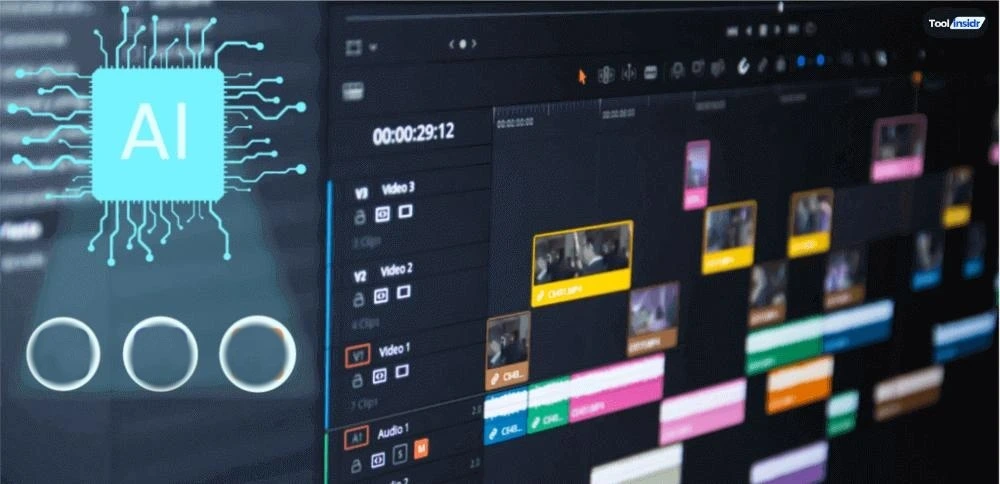
Al Videos From Text Follow these professional steps to transform your ideas into stunning visuals using the latest 2026 AI technology.
Step 1: Choose Your Preferred AI Video Generator
First, select a platform that fits your project needs. In 2026, the most reliable free-tier options are:
Runway: Best for cinematic realism.
Pika: Best for fun, physics-based animations.
Kling AI: Best for long, high-motion video clips. Most of these platforms offer daily free credits or a trial period for beginners.
Step 2: Create Your Free Account
Visit the official website of your chosen tool and sign up using your Google account or email. Many modern platforms now offer “No-Signup” previews, but creating an account is necessary to download your AI videos from text without losing progress.
Step 3: Write a Detailed AI Video Prompt
This is the most important part. To get high-quality results, use “Descriptive Prompting.” Instead of a simple sentence, add details about lighting, camera angle, and mood.
Pro-Level Example Prompt:
“A 4K cinematic drone shot of a futuristic neon city at night, heavy rain falling, glowing street lights reflecting on wet pavement, hyper-realistic, 8k resolution.”
Tip: The more specific you are about the “Vibe” and “Camera Movement,” the better your AI video will look.
Step 4: Select Your Visual Style & Aspect Ratio
In 2026, AI generators provide pre-set styles to save you time. Choose a style that matches your platform:
Cinematic: Best for YouTube and Film.
Anime/Cartoon: Best for storytelling.
Realistic: Best for ads and professional reels.
3D Animation: Best for gaming content.
Don’t forget to set your Aspect Ratio (16:9 for YouTube or 9:16 for TikTok/Reels).
Step 5: Generate & Refine Your Video
Click the Generate button and wait a few seconds while the AI processes your request. The engine will automatically render the scenes, fluid motion, transitions, and cinematic effects based on your prompt. In 2026, most tools now offer a “Preview” mode so you can check the quality before using your final credits.
Step 6: Download & Export for Social Media
Once you are satisfied with the result, download your AI videos from text in the highest available resolution. These videos are perfectly optimized for:
YouTube Shorts & Facebook Reels: Great for high-retention storytelling.
TikTok & Instagram Reels: Perfect for viral trends and AI-driven memes.
Expert Tips to Create Better AI Videos
To make your content stand out from the crowd, follow these professional strategies:
Master Prompt Engineering: Instead of a generic prompt like “City,” use a descriptive one like: “A futuristic cyberpunk city at night with flying cars, neon reflections on wet streets, and 8K cinematic lighting.”
Inject Cinematic Keywords: Enhance your results by adding terms like “Ultra-realistic,” “Drone shot,” “Volumetric lighting,” “Slow motion,” and “Depth of field.”
Keep Clips Short and Impactful: AI models currently perform best with shorter durations. Aim for 5 to 15 seconds to maintain high-quality motion and avoid distortions.
Enhance with Post-Production: After generating, use tools like CapCut or Premiere Pro to add:
Immersive Sound Effects (SFX)
Trending Background Music
Dynamic Subtitles & Captions
Are AI Video Generators Truly Free?
Yes, most top-tier AI platforms offer free tiers in 2026, though they usually come with some constraints:
Watermarks: Some free versions include a small brand logo.
Credit Systems: You might get 10-30 free credits daily or monthly.
Resolution Limits: Free users often export in 720p or 1080p instead of 4K. Despite these limits, free plans are excellent for beginners to practice and grow their social media presence.
Final Thoughts
AI video generation is no longer the future—it is the present. In 2026, the barrier to entry has disappeared, allowing anyone to transform a simple idea into a cinematic masterpiece. By using powerful tools like Runway, Pika, and Kling AI, you can stay ahead of the competition on platforms like YouTube and TikTok.
The best way to learn is to start experimenting. Start playing with different prompts and styles today to master the art of creating AI videos from text!